
Ajwa, Safawi, Mabroom and Sukari are all Saudi varieties, so buying them in bulk can mean dealing with a Saudi dates exporter directly. Malaysia has no commercial date-growing trade, so every one of these reaches a Malaysian shelf as an import. This guide covers what a buyer here needs to settle with the exporter before the first carton moves. That means the varieties and where each comes from, the season, the quote, the papers and the shipment. At the end there is a price table from one Malaysian wholesaler, so you have a local figure to compare against.
The Saudi varieties and where each one comes from
Five of the eight Saudi varieties in the table come from Madinah or the Madinah region. Sukari comes from Al-Qassim, and Khalas from Al-Ahsa, with the UAE also given as an origin for it.
| Variety | Origin | Description |
|---|---|---|
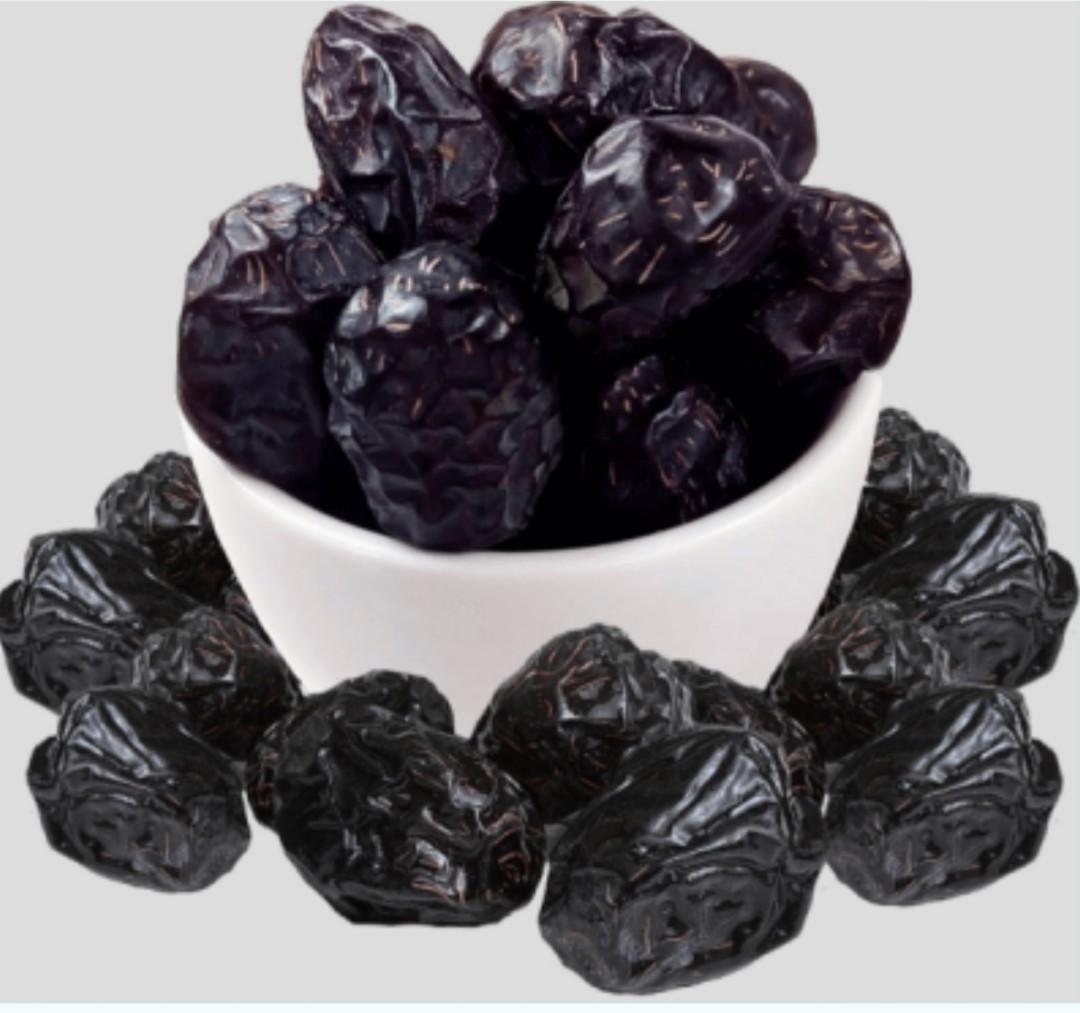
| Ajwa ("Kurma Nabi" is a market name for it) | Madinah | Small, roundish, near-black, finely wrinkled skin, soft |
| Safawi | Madinah region | Longer than Ajwa, dark brown to black, soft and chewy |
| Mabroom | Madinah region | Long and slender, reddish-brown, semi-dry, chewy |
| Ambar (Amber) | Madinah | Ask the exporter for a sample and spec |
| Sugai | Madinah | Ask the exporter for a sample and spec |
| Sukari | Al-Qassim | Golden-amber, very sweet; sold soft (rutab) or drier |
| Khudri | Saudi Arabia | Brown, semi-dry, an everyday value date |
| Khalas | Al-Ahsa (also the UAE) | Soft, caramel-coloured |
"Kurma Nabi" is a market name for Ajwa, not a separate variety, so an offer for "Nabi dates" should still say Ajwa on the spec sheet. Sukari is the one to watch for ripeness. It is sold both as soft rutab and as a drier date, and FAO's shipping notes below apply to the soft form.
Season: when new-crop Saudi dates move
Gulf and Middle-East dates are mostly harvested from late summer to autumn, roughly August to November. New-season stock reaches Malaysia some weeks after that. If an exporter gives a harvest month for a particular lot, get it in writing.
Dates are not sold only straight after harvest. FAO's Date Palm Cultivation handbook (chapter IX, on harvesting, packing and marketing) says "much of the fruit is marketed throughout the year (especially fruit at the Tamar stage), and sometimes even after a year has passed, because of the need to prepare the fruit for Christian festivals, or at times when the Muslim Feast of Holy Ramadan is close to harvest time". For a Malaysian buyer, demand peaks before and during Ramadan, with Hari Raya, weddings, kenduri and umrah gifts as other peaks. Book the order well ahead of the peak you are buying for, and ask whether the fruit is this season's or stored stock.
Rutab, tamar and what to ask about soft Sukari
Rutab is the soft, fresh-ripe stage. Tamar is fully ripe and drier. FAO's chapter I (botanical description of the date palm) says that dates at every stage except tamar "are perishable, due to their high water content".
That matters for the shipment. For fresh dates at the khalal or rutab stage, FAO's chapter IX says "a temperature recorder must be placed in the container, the truck or on the surface", and that the customer will only sign the receipt for the shipment if the temperature corresponds to the demands defined for the carrier. So when a Saudi dates exporter quotes soft Sukari, ask how it will travel and whether a temperature record comes with it. FAO's chapter I calls the tamar stage "the best condition for storage".
What a Saudi dates exporter's quote should spell out
A one-line price per carton leaves too much open. Ask for these in writing.
Grade and pack
Grade names such as A, AA, AAA or Jumbo are each importer's own size sorting. They are not an international standard. Never assume two sellers' "AA" match, so ask what the grade means and get a sample of that exact grade. For bulk, FAO gives the usual carton as 5 kg or 15 lbs, "depending on the country where the fruit was produced or where it is to be marketed", sometimes with a plastic bag inside. Confirm the net weight per carton.
Incoterm and named place
The quote should carry an Incoterm. The US International Trade Administration lists 11 Incoterms rules. Each one sets out the tasks, costs and risks for the buyer and the seller, and when risk passes from one to the other. For sea freight the format is, for example, FOB with the named port of loading, or CFR and CIF with the named port of destination. The CIF name covers cost, insurance and freight; FOB's name mentions neither freight nor insurance. Incoterms do not cover the price, the method or timing of payment, or which documents the seller must supply for customs in your country. Those need their own lines in the contract.
Labels
FAO notes that in most importing countries "the law demands that data such as weight, country of origin, quality and date of expiry, appear on the package". Ask to see the carton label before shipment, and check that it names the variety you ordered.

Papers for the trip to Malaysia
FAO's chapter IX says every shipment must be documented in detail. Beside the documents for customs, payment and transport, "it is important to add a phytosanitary certificate stating that the fruit is healthy". It also says this certificate "is issued in every country by the relevant authorities". FAO adds that many clients, "especially from European markets", ask growers for a documented spraying report with residue levels checked against the Codex Alimentarius limits. You can ask a Saudi dates exporter for the same.
On the Malaysian side, the US International Trade Administration's Malaysia guide (written for US exporters, last published 30 June 2026) lists an invoice, packing list, insurance certificate, bill of lading or airway bill, permits, licences and certificates, and Customs Form No. 1 with the description, value, weight, quantity and country of origin of the goods, filed through the uCustoms portal. It says all duties and taxes, including import tax and sales tax, must be paid before the goods are released. MAQIS (the Malaysian Quarantine and Inspection Services) tells applicants who want to register as an importer, exporter or agent to complete its registration-conditions form first, start on its SPEED system, and apply for MAQIS permits through Dagang Net's ePermit site. That page does not list dates by name, so confirm with MAQIS what your consignment needs.
Shipping and checks on arrival
FAO lists four ways to ship: overland, by sea, sea and land combined, and by air. It calls sea containers "an efficient and (relatively) cheap means of transport" and air "the most expensive", though sometimes inevitable when fruit must be supplied at short intervals. It also advises choosing the cheapest transport that delivers the fruit undamaged and on time.
Fruit is sometimes stored for up to several months before shipment, so FAO says "it is necessary to sample each consignment" to make sure quality has not changed, and that labels and markings must be checked during loading. If you cannot be there, ask the exporter for photos of opened cartons from your lot and of the loading.
A local price check: Saudi varieties on one Malaysian wholesale list
Before you work out a landed cost from a Saudi dates exporter's quote, it helps to know what the same varieties cost from stock already in Malaysia. The table shows one Malaysian wholesaler's listings, checked in November 2026: every in-stock Ajwa, Safawi and Sukari listing, plus its single Mabroom listing, which was out of stock. Eight Ajwa and two Safawi listings on the same list were out of stock and are left out.
| Listing | Pack | Price | Per kg | Stock |
|---|---|---|---|---|
| Ajwa A 2026 | 1 kg | RM31 | RM31.00 | In stock |
| Ajwa AA 2026 | 1 kg | RM36 | RM36.00 | In stock |
| Ajwa AAA VIP (Large) | 1 kg | RM44 | RM44.00 | In stock |
| Ajwa Premium A No.1 (Small) 2026 | 5 kg | RM115 | RM23.00 | In stock |
| Ajwa Premium VIP AAA | 5 kg | RM175 | RM35.00 | In stock |
| Safawi A | 1 kg | RM35 | RM35.00 | In stock |
| Safawi AAA Jumbo | 1 kg | RM45 | RM45.00 | In stock |
| Safawi Premium A No.2 (Mini) 2026 | 5 kg | RM80 | RM16.00 | In stock |
| Safawi Premium A No.1 (Small) 2026 | 5 kg | RM95 | RM19.00 | In stock |
| Safawi Premium AA | 5 kg | RM153 | RM30.60 | In stock |
| Safawi Premium AAA | 5 kg | RM163 | RM32.60 | In stock |
| Safawi Premium Jumbo | 5 kg | RM195 | RM39.00 | In stock |
| Rotab Sukkary Premium | 3 kg | RM63 | RM21.00 | In stock |
| Mabroom Madinah AA | 5 kg | RM230 | RM46.00 | Out of stock |
On this list the in-stock Ajwa runs from RM23 to RM44 a kilo and the in-stock Safawi from RM16 to RM45, and the lowest figure for each belongs to a pack labelled Small or Mini. So when you set an exporter's per-kilo price beside these, compare like with like: same variety, same size label, same pack. The Sukari here is sold as rotab, the soft stage, in a 3 kg pack.
Where to read next
If you are still deciding between importing and buying locally, this comparison of a wholesale supplier and an exporter by order volume works through that choice. Our guide to finding a date fruit exporter covers packinghouse types, papers and payment terms in more depth. For a variety-specific example, see the Medjool exporter guide on size grades and carton formats, and before you order, read the notes on asking a supplier for samples.
Short answers
Is Kurma Nabi a different date from Ajwa?
No. Kurma Nabi is a market name for Ajwa, which comes from Madinah.
Does "AAA" mean the same size from every Saudi dates exporter?
No. Grade letters are each importer's own size sorting, not an international standard. Ask for the definition and a sample.
What does FAO say about shipping fresh rutab dates?
FAO calls dates at every stage except tamar perishable, and says a temperature recorder must be placed in the container, the truck or on the surface for fresh khalal or rutab fruit. If you are buying soft rutab Sukari, ask the exporter how it will travel.
Who issues the phytosanitary certificate?
FAO says it is issued in every country by the relevant authorities and certifies that the fruit is not infected by pests or diseases and is appropriate to the standards of the importing country. Ask the exporter to include it with the shipping documents.