
Sourcing from a Medjool dates exporter is a different job from buying a box at a shop. You are agreeing on origin, size class, pack format and condition before the fruit leaves the packinghouse, and the words on the quote decide what turns up. This guide covers where Medjool is grown, how size grades are set, which carton and pack formats you will meet, and the questions to put to an exporter before you commit. It uses the FAO's date palm handbook for the export side and one Malaysian wholesaler's price list, checked in November 2026, for what those formats cost once they reach Malaysia.
Where Medjool comes from
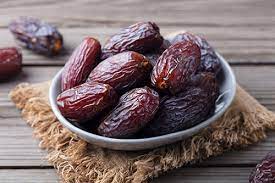
Medjool originated in Morocco. The FAO handbook places it in the Tafilalet area, where it was the main export date from the 17th century and was sold in gift boxes for Christmas in Paris, Madrid and London. It was taken to the USA in 1927 and to Israel in 1934. FAO also notes that all the Medjool palms in the world trace back to one palm in Bou Denib, Morocco.
For present-day supply, the same handbook (published in 2002) names Coachella Valley and Bard in California, Morocco and Israel as the main producing areas, with small amounts from Mexico, Namibia and South Africa. At that time FAO put Medjool output at less than 5,000 tons a year. That figure is old and should not be read as today's supply. In the same passage FAO describes Deglet Nour as harvested yearly "in tens of thousands of tons", so at the time Medjool was by far the smaller crop.
Malaysia grows no dates commercially. Every Medjool sold here is imported. The Malaysian wholesaler whose prices appear below labels all nine of its Medjool listings as Palestinian, with stock from Palestine and the Jordan Valley.
How exporters grade Medjool
In FAO's account, quality sorting comes before size. FAO says size sorting can be done in one or two stages. In the first, fruit is split into four groups:
| FAO stage 1 group | What it holds |
|---|---|
| Grade A | Perfect fruit |
| Grade B | Fruit with skin separation |
| Grade C | Fruit for pitting and industrial use |
| Grade D | Rotten and damaged fruit |
Only Grade A then goes on to be sorted by size into jumbo, large and medium. FAO says this second step is particularly important for large-fruited varieties such as Medjool.
The size names are not fixed worldwide. For Medjool in Israel, FAO gives sizes by fruit weight: Jumbo above 23 g, Large 18 to 23 g, and Medium 15 to 18 g. It adds that other countries, the USA for one, use other definitions. So "Jumbo" from one Medjool dates exporter may not match "Jumbo" from another. Grades such as Large, Jumbo and Super Jumbo are each importer's or packer's own sorting, not an international standard. On a quote, ask what weight range sits behind each name.
For the whole fruit, FAO's description is "very large (20 to 40 gram)", with a seed of about 1.5 g.
Skin and sugar: the two faults that cost money
FAO lists two typical non-disease faults in Medjool. The first is loose skin: as the flesh loses water, the skin separates from it. FAO calls this "an aesthetic defect rather than a taste defect", and past a set share of loose skin the fruit is graded Class II. The second is sugar crystals forming on the flesh and under loose skin, which FAO also treats as an aesthetic defect that puts fruit into Class II.
FAO's packing chapter adds that skin separation is more serious in varieties such as Medjool, "significantly lowering the price for export fruit". When you compare two exporters' prices, check that both are quoting the same class. A cheaper offer for Class II fruit is not the same product as perfect Jumbo fruit.
There is more on how the skin of a Medjool is judged in our piece on date skin and grading faults, and the ripening stages that shape it are covered in how a date builds its skin.
Carton and pack formats
For bulk fruit, FAO says dates are packed in cardboard boxes, sometimes with plastic bags inside, and that the usual weight is 5 kg or 15 lbs depending on where the fruit was produced or where it is going.
Once Medjool reaches Malaysia it is sold in more shapes than that. The table lists all nine Medjool listings from one Malaysian wholesaler, checked in November 2026. Per-kilo prices are the listed price divided by the total weight.
| Size name | Pack format | Total weight | Price | Per kg | Stock |
|---|---|---|---|---|---|
| Large | 5kg carton | 5kg | RM250 | RM50.00 | Out of stock |
| Large | 8 × 1kg packs | 8kg | RM394 | RM49.25 | Out of stock |
| Large | 24 × 250g packs | 6kg | RM355 | RM59.17 | Out of stock |
| Jumbo | 12 × 500g packs | 6kg | RM290 | RM48.33 | Out of stock |
| Jumbo | 12 × 500g packs (second listing) | 6kg | RM355 | RM59.17 | In stock |
| Jumbo | 5kg carton (Premium Jumbo) | 5kg | RM280 | RM56.00 | In stock |
| Jumbo | 8 × 900g boxes | 7.2kg | RM448 | RM62.22 | In stock |
| Jumbo | 900g box | 0.9kg | RM70 | RM77.78 | In stock |
| Super Jumbo | 5kg carton | 5kg | RM315 | RM63.00 | In stock |
That wholesaler describes its Medjool grades as a sort by fruit size, from Large through Jumbo to Super Jumbo, the largest. Every Large listing was out of stock when checked.
Two things stand out. Pack format moves the per-kilo price a long way: Jumbo alone ran from RM56 a kilo in the 5kg carton to RM77.78 in the single 900g box, among the in-stock listings. And a bigger size class does not always cost more per kilo. The out-of-stock Jumbo 12 × 500g listing at RM48.33 a kilo was cheaper than the out-of-stock Large 5kg carton at RM50. Do the division on every line of a quote rather than assuming the order.
What the label has to say
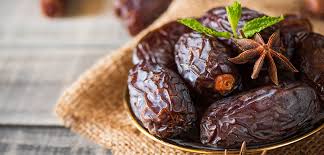
FAO notes that in most importing countries the law requires weight, country of origin, quality and expiry date on the package. In a packinghouse checklist for fruit aimed at European supermarkets, it lists what should be printed on all packaging: net weight, country of origin, who grew and packed it (with address), product and variety, and the class or grade.
Some printing on a box serves other ends. FAO gives "CALIFORNIA DATES" and "KING SOLOMON" as examples of labelling used for American and Israeli Medjool, alongside wording that serves sales promotion. Read the mandatory fields for origin and class. Don't rely on a brand line to tell you either.
Questions to ask a Medjool dates exporter
Start with origin and size. Which country and growing area is the fruit from, and what weight range is behind each size name on the price list? A "Jumbo" defined by grams is something you can check on arrival. A "Jumbo" defined by nothing is not.
Then class. Is the quote for Grade A fruit sorted by size, or does it include fruit with skin separation? Ask for the share of Class II in the lot if it is mixed.
Ask about pack format and weight next: 5kg cartons, 15 lb cartons, or retail packs of 250g, 500g, 900g or 1kg. As the table shows, the same size can sit at very different per-kilo prices depending on the pack.
Ask how the fruit has been held. FAO says the temperature commonly used for long-term storage of several varieties, Medjool included, is −18°C, and that it reduces water loss, sugar crystallisation and skin separation. FAO also notes that fruit is sometimes stored for months before shipment, and that each consignment should be sampled to make sure its quality has not changed. Ask whether that was done and what the results were. Our post on sampling dates for quality covers asking for samples before a bulk order.
Finally, labelling. Confirm that the cartons will carry net weight, origin, packer, variety and class, and that they meet the rules where the fruit is going.
Short answers
Is Medjool from Palestine different from Medjool from California?
It is the same variety. FAO traces every Medjool palm to one palm in Morocco. FAO also says size definitions differ between countries, which is why the questions above matter more than the country name alone.
Does Jumbo always mean the same size?
No. FAO gives Israel's weight bands and says the USA and other countries use other definitions. Ask each Medjool dates exporter for its own weights.
Is Large always cheaper than Jumbo?
Not on the Malaysian list above. The out-of-stock Jumbo 12 × 500g listing cost less per kilo than the out-of-stock Large 5kg carton. Compare per-kilo prices for the same pack format.
More about this site is on the About Us page and the contact page.